In flat-roof PV jobs, the poles of solar panel ballast system are the big parts that let whole thing hold against wind. Many folks think just put concrete blocks on top is fine, but in real, wind load math directly says if system safe. This guide show you how do this math with a normal way.
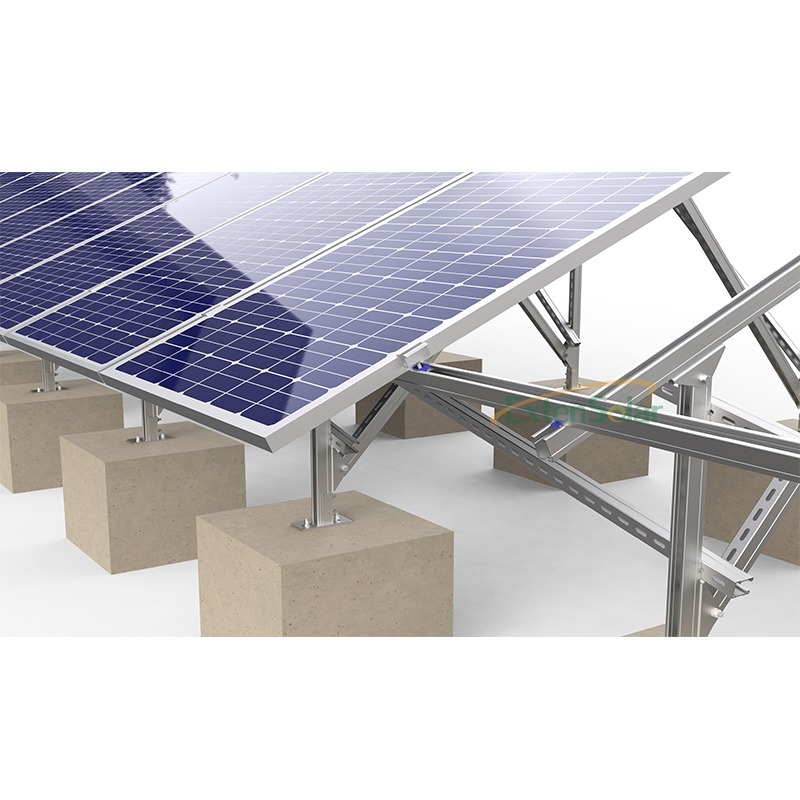 Why Wind Load Calculations Are Important
When wind go over a roof, air make big lift force at edges and corners of the array. If design of solar panel ballast system poles no think about these local wind pressures, whole system might move or even tip over. In other words, get wind loads right not just to follow rules, but to make sure system stay good for ten or even twenty years.
Basic Calculation ProcessFor find wind loads, need three basic things: basic wind pressure, height factor, and ground factor. Basic wind pressure can get from local weather data and is in kilopascals (kPa). Height factor come from roof's high above ground. Ground factor show if there are things around block wind.
With these numbers, you can first get the net wind push on one module. Then, send this force to the solar panel ballast system poles. The forces on the solar panel ballast system poles come in two kinds: lift-up forces and side forces. Both force types must get check separate.
Determining Ballast WeightThe solar panel ballast system sticks no give any weight. Weight come from concrete blocks put on their base parts. Need find smallest ballast weight to stop lift forces. A common rule say use safety factor 1.5 for lift stop. So, if wind load math show lift force of 500 kg, total ballast weight must be not less than 750 kg.
It is also big to note that how the solar panel ballast system poles are set up change ballast work good. Put many solar panel ballast system poles together into one thing work way better than put them one by one. Connectors can push local wind pressure around, cut down the ballast weight need at each single spot.
Handling Corner AreasWind loads not same in all spots on flat roof. Loads low in middle, okay along edges, and high in corners. Many bad installs happen because people miss this. If you put same ballast weight on whole roof, the solar ballast poles in corners will be in danger.
The usual way is split roof in three parts: middle, side, and corner. For corner parts, ballast weight is often 50% to 80% more than for middle part. Your solar panel ballast system pole pick chart must show this change, not just give one average number.
Checkpoints for Actual InstallationAfter do the math, some things need check when put on site. First, make sure real roof slope not more than 5 degrees. Over this, the solar panel ballast system no good no more. Second, see if the solar panel ballast system pole bases touch full with roof surface. Any gaps make stress not even. Third, before big wind come, best use torque wrench to spot-check tight of some bolts.
Common Mistake RemindersOne big mistake people do is count only up-down forces but forget side forces. Strong winds not just lift up but also push from sides. Solar solar panel ballast system poles must hold loads in both ways at same time. Another common mistake is use weight of new concrete blocks for math, but real concrete water amount change. A more safe way is check math with dry weight.
In short, figure wind load for solar panel ballast system poles not hard, but need careful think each number and zone part step by step. Long as you count corner zones alone and check both up push and side pull forces at same time, your solar panel ballast system will work safe for many years.


